エクスプローラー(Northstar)
エクスプローラーは、組織のアプリケーション層の包括的なビューを提供し、セキュリティ体制をより深く理解するのに役立ちます。これにより、アプリケーションとその関連エンティティ全体のリスクを比較できます。
開発者やアプリケーションセキュリティ担当は、エクスプローラーを活用して、管理対象のアプリケーションと関連するリスクをより深く理解できます。
セキュリティ運用(SOC)担当は、エクスプローラーを活用して、組織全体の攻撃対象範囲とリスクをより深く理解できます。
エクスプローラーにおけるエンティティとは、アプリケーション、サーバ、呼び出しAPI、データベース、データストアなどを指します。
エクスプローラーの機能
アプリケーションエンティティの詳細パネルから、次のことができます。
選択したアプリケーションに関連するインシデントや課題を表示
Assessルール、ADR(Protect)ルール、例外のポリシーの設定
開始する前に
エクスプローラーに表示されるエンティティは、アクセス制御の設定で定義された、特定のリソースを表示するために必要なアクセス権限によって異なります。
エクスプローラーエンティティを表示
左側のナビゲーションで、 エクスプローラーを選択します。
最初に表示されるのは、組織全体のアプリケーション層を視覚的に表現したものです。
アプリケーションエンティティにはContrastスコア が表示されるため、アプリケーション内で最もリスクの高い領域をすぐに確認できます。
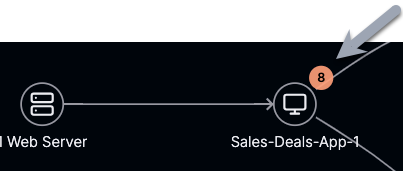
マウス、トラックパッド、またはその他のナビゲーションデバイスを使用して、表示を拡大したり移動したりできます。
Select Prod, QA, or Dev to focus the view on entities in that environment. Explorerエクスプローラー defaults to the highest-priority environment that has Contrast data. For example, if applications are running in production, defaults to Prod. If there is no production data, Explorerエクスプローラー defaults to QA or Dev, depending on which has data.
Select Include static-only to include entities Contrast has only observed through static analysis, without runtime data.
特定のエンティティとその接続に表示を絞り込むには、検索バーにエンティティ名の一部または全部を入力してください。
You can also enter the full or partial name for a CVE.
検索結果には、検索されたエンティティとそれに接続されているすべてのエンティティが含まれます。結果にはフィルター設定も反映されます。
エンティティを選択すると、その詳細パネルが開きます。
Overview: Contrast score, a Profile panel (language, routing framework, last seen), Criticality, Routes exercised, incidents, and issues by severity.
Libraries summary: Library issues by severity, CVE by status, and a CVE Shield exposure trend chart for the application's libraries. Library entities represent either a root open-source library or a transitive dependency.
注記
Viewing library data is different than viewing other entities. View library data in Explorerエクスプローラー describes how to navigate library entities.
Library details: A sortable, paginated table of every library, version, and CVE affecting the application, with per-environment issue status.
Policy: Assess rules, Protect rules, and Exclusions rule tables you can manage, with per-environment mode toggles.
Dependencies: Dependency tree for the selected library cluster, matching the Dependencies tab available from a library cluster node.
From the Application details page, you can select the Download button to generate a CycloneDX version of the report that includes the component name and version, origin or source (open-source or proprietary), license information, supply chain relationships (dependencies), and vulnerabilities.
Select an entity see more details:
エンティティ
詳細
サーバ
種類:1つ以上のアプリケーションに関連付けられているサーバの種類。
エージェントの言語:サーバに関連付けられているアプリケーションで使用されるエージェントの言語。
エージェントのバージョン:サーバに関連付けられているアプリケーションで使用されるエージェントのバージョン。
呼び出しAPI
ドメイン:API のドメイン名。
データベース
サーバアドレス:サーバのアドレス。
システム:データベースの種類(例、MySQL)。
サーバポート:データベースがサーバとの通信に使用しているポートの番号。
Libraries
Library entities represent either a root open-source library or a transitive dependency.
Root library entities show the number of dependencies. You can expand these entities to view all dependencies or just the next level of entities in the dependency chain.

Entities for transitive dependencies show the name of the library. In some cases, you can expand these entities to view another level of dependencies.

The details panel for a transitive dependency entity can include:
Name: The name of the library.
Version: The library version.
Language: The library language.
Licenses: The name of the license that applies to the library. For example, Apache-2.0.
Released: The date the library was released.
Ancestors (if applicable): The libraries that uses the transitive dependency indirectly.
For example, If Library 1 calls Library 2, Library 1 is the ancestor of Library 2.
Issues (if applicable): A link to the issues that Contrast created.
Selecting a link opens the Issues view.
Direct CVEs (if applicable): CVEs that indicates a software flaw exists that lets an attacker take direct action, unauthorized access, or control of software.
Descendant CVEs (if applicable):
A descendant CVE is a vulnerability in a child process (descendant) of another process.
CVE link: A link to the NIST description of the CVE
Library: The name of the transitive dependency
Path: The path to the affected dependencies
Score: The CCVSS (Common Vulnerability Scoring System) score
エクスプローラーの表示の絞り込み
表示を絞り込むには、フィルターアイコン( )を選択してフィルターパネルを開き、1つ以上のフィルターとフィルターオプションを選択します。利用可能なフィルターは次のとおりです。
Type: Type of entity: application, server, API, database, library, or repository
言語: 表示したいアプリケーションの言語
未対応課題の深刻度:課題の深刻度
未対応インシデントの深刻度:インシデントの深刻度
アプリケーション:アプリケーション名
AI: Whether the application uses AI/ML functionality, as detected by the agents. Select Uses AI to show only applications with detected AI/ML activity. Select Does not use AI to show only applications where no AI/ML activity has been detected.
Repositories: Filter by connected source code repository. This is a searchable, multi-select list.
Lifecycle: Filter by whether an entity is Active or Archived. Defaults to Active only selected, so archived entities don't clutter the graph unless you ask for them.